
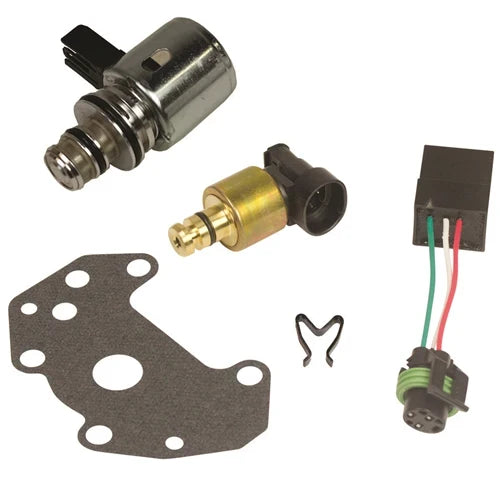
Understanding Governor Pressure in 47RE & 48RE Transmissions
Why the Governor Pressure Solenoid and Transducer Are Essential to Proper Shifting
The Dodge 47RE and 48RE transmissions rely on two important electronic components to control automatic shift timing: the governor pressure solenoid and governor pressure transducer.
These components work together with the truck's PCM (Powertrain Control Module) and the transmission's valve body to deliver consistent shifts based on vehicle speed and throttle demand.
When either component fails, the transmission may experience delayed shifts, premature shifts, erratic shifting, or even a failure to upshift.
Understanding how these components operate can help truck owners identify potential problems before they lead to more expensive repairs.
What Is Governor Pressure?
Governor pressure is hydraulic pressure used to help determine when the transmission shifts gears.
Unlike older transmissions equipped with mechanical governors, the 47RE and 48RE use an electronically controlled governor pressure system.
As vehicle speed increases, the PCM commands additional governor pressure. Under normal operating conditions, governor pressure generally follows a 1 PSI for every 1 MPH relationship.
For example:
-
10 MPH = Approximately 10 PSI
-
20 MPH = Approximately 20 PSI
-
30 MPH = Approximately 30 PSI
-
40 MPH = Approximately 40 PSI
-
50 MPH = Approximately 50 PSI
This pressure acts on the shift valves inside the transmission's valve body, helping control shifts from first to second gear and second to third gear.
As governor pressure increases, it works against throttle pressure and spring tension. Once enough pressure is present to overcome these opposing forces, the appropriate shift valve moves, allowing the transmission to shift into the next gear.
The 1 PSI per MPH relationship is a general guideline rather than an exact requirement under every operating condition.
What Does the Governor Pressure Solenoid Do?
The governor pressure solenoid is an electronically controlled hydraulic valve located on the valve body.
Its job is to regulate governor pressure based on commands from the PCM.
As the truck accelerates, the PCM adjusts the electrical signal sent to the solenoid, increasing governor pressure as vehicle speed rises.
The solenoid doesn't physically shift the transmission. Instead, it controls the pressure that operates the hydraulic shift valves.
Symptoms of a Failing Governor Pressure Solenoid
A solenoid that sticks, responds slowly, or cannot regulate pressure accurately may cause:
-
Delayed or premature shifts
-
Inconsistent shift points
-
Unexpected downshifts
-
Failure to upshift
-
Intermittent shifting problems
-
Transmission trouble codes
- 3rd gear starts (limp mode)
It's important to understand that a solenoid can test correctly electrically while still failing hydraulically due to internal wear, contamination, or mechanical sticking.
What Does the Governor Pressure Transducer Do?
While the solenoid regulates governor pressure, the governor pressure transducer measures actual pressure and reports it to the PCM.
This feedback allows the PCM to compare commanded pressure against actual pressure and make adjustments when necessary.
For example, if the PCM commands 30 PSI but the transducer reports only 20 PSI, the PCM can adjust the solenoid to increase pressure.
However, if the transducer provides an incorrect reading, the PCM may make unnecessary adjustments, resulting in unpredictable shifting.
Symptoms of a Failing Governor Pressure Transducer
-
Erratic or inconsistent shifting
-
Early or delayed shifts
-
Incorrect governor pressure readings
-
Unexpected changes in shift behavior
-
Transmission trouble codes
Because the solenoid and transducer work together, replacing one component doesn't necessarily correct a problem caused by the other.
How Does Governor Pressure Control the Valve Body?
Inside the 47RE and 48RE valve body are hydraulic shift valves responsible for directing transmission fluid to the appropriate clutches and bands.
Two of the most important are the 1–2 shift valve and 2–3 shift valve.
These valves respond to a balance of governor pressure, throttle pressure, and spring tension.
Governor pressure generally increases with vehicle speed, encouraging the transmission to upshift.
Throttle pressure increases with throttle demand, helping delay upshifts during heavier acceleration.
During light acceleration, lower throttle pressure allows the transmission to shift at lower vehicle speeds.
During heavy acceleration, increased throttle pressure requires more governor pressure before an upshift occurs, allowing the transmission to hold each gear longer.
This balance is what allows the transmission to respond to different driving conditions without requiring the driver to manually select each gear.
Why Governor Pressure Matters in Performance Transmissions
Performance-built 47RE and 48RE transmissions commonly feature upgraded clutch packs, billet components, performance torque converters, and increased line pressure.
However, these upgrades don't eliminate the importance of accurate governor pressure control in an automatic valve body.
Governor pressure and line pressure serve two different purposes.
-
Line Pressure: Supplies hydraulic pressure to the transmission's circuits, including those responsible for applying clutches and bands.
-
Governor Pressure: Provides the hydraulic signal used to help determine automatic shift timing.
Increasing governor pressure does not automatically improve clutch holding capacity or produce firmer shifts.
Excessive governor pressure can cause premature upshifts, while insufficient governor pressure can delay shifts or prevent them altogether.
Even a transmission equipped with high-performance internal components can experience poor shift quality if its governor pressure system isn't operating correctly.
Can Governor Pressure Problems Damage a Transmission?
Yes. Although a failing solenoid or transducer doesn't automatically cause internal damage, incorrect shift timing can contribute to additional transmission wear.
Unexpected shifts under heavy throttle, repeated gear hunting, or delayed shifts can place unnecessary stress on transmission components.
Addressing these problems early can help prevent more extensive repairs.
How Are Governor Pressure Problems Diagnosed?
Proper diagnosis involves comparing commanded governor pressure, reported governor pressure, and actual hydraulic pressure.
A capable scan tool allows technicians to monitor the PCM's commanded pressure and the transducer's reported pressure.
A mechanical pressure gauge connected to the governor pressure test port provides an independent measurement.
For example, if the mechanical gauge reads 30 PSI but the scan tool reports 45 PSI, the transducer or its electrical circuit may be providing inaccurate information.
If both readings agree but pressure isn't responding correctly to PCM commands, the issue may involve the solenoid, valve body, or governor pressure hydraulic circuit.
Testing actual hydraulic pressure is one of the most effective ways to distinguish an electronic feedback problem from a hydraulic control problem.
Automatic vs. Full Manual Valve Bodies
A factory-style automatic 47RE or 48RE valve body uses governor pressure to control automatic shift timing.
A properly designed full manual valve body (FMVB) uses modified hydraulic circuits that allow the driver to control gear selection directly through the shifter.
Because the transmission no longer relies on automatic shift scheduling, the factory electronic governor pressure system may no longer be necessary for gear selection.
However, removing the governor pressure solenoid or forcing maximum governor pressure does not automatically convert a factory valve body into a full manual valve body.
Proper hydraulic modifications are required to ensure the clutches and bands apply and release correctly.
The Thompson Transmission Approach
At Thompson Transmission, we understand that building a dependable transmission requires more than installing stronger internal components.
The valve body, hydraulic circuits, and electronic pressure controls must work together to deliver consistent performance.
Whether your truck is used for daily driving, heavy towing, or high-horsepower applications, accurate governor pressure regulation is essential to reliable automatic shifting.
Final Thoughts
The governor pressure solenoid and transducer are small components with a major responsibility.
The solenoid controls governor pressure, the transducer monitors it, and the PCM uses that information to maintain proper automatic shift operation.
When these components operate correctly, the valve body can deliver consistent shifts based on vehicle speed and throttle demand.
At Thompson Transmission, we believe understanding how your transmission operates is an important part of keeping it reliable.
Thompson Transmission — Built for Performance. Engineered for Reliability.